
The CDG asks for your consent: We would like to process your pseudonymised data about the use of the website for analysis purposes in order to understand how visitors use our website so that we can make it even better and more intuitive. We use the open-source software Matomo for this purpose. By clicking on "accept all" you can give us your consent for this. You can revoke your consent at any time with effect for the future. You can withdraw your consent at any time by clicking the button "Customise cookie settings" and unchecking the "Analyse" box. The legality of the processing carried out up to that point is not affected by the cancellation.
Without your consent, we will only process your data to the extent technically necessary to display the website to you. Information on the required data processing and the technically required cookies can be found after clicking on the "Settings" button under "Required cookies" and in our privacy policy.
CD Laboratory for Molecular Cancer Chemoprevention
Head of research unit
Commercial Partner
Shire Pharmaceutical Development Limited, Giuliani S.p.A., Biogena Naturprodukte GmbH & Co KG, AOP Orphan Pharmaceuticals GmbH
Duration
01.10.2007 - 30.09.2014
Phasing out period:
01.10.2014 - 31.12.2014
01.10.2014 - 31.12.2014
Thematic Cluster
Medicine
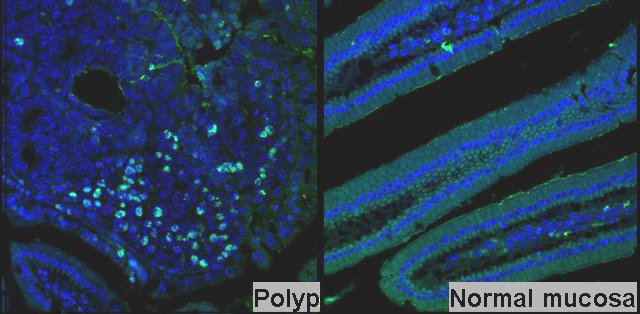
Research is being carried out to gain a better understanding of the prevention of colon cancer using certain natural and pharmaceutical substances. To this end, the molecular processes of these substances on the development of cancer are being investigated and new, more effective substances are being developed and tested.
Substances such as aspirin and mesalazine are structural variants of salicylic acid. The plant-based colouring and spice curcumin, on the other hand, is derived from phenolic acid. All three substances have one thing in common: they have been proven to protect against the development of bowel cancer. This process, known as chemoprevention, is analysed in more detail here.
Of particular interest is how these three structurally similar substances can influence different processes of cell division. For example, aspirin acts on a phase in the process of cell development and division known as the G1 phase, while mesalazine acts on the phase known as the S phase. Both phases are based on very different molecular processes that are influenced by these substances.
How this influence on molecular processes takes place is being researched in detail. In addition to curcumin, the effects of thymoquinone (black cumin oil), ginkgo, green tea, quercetin and luteolin are also being tested. Furthermore, the medicinal influence of conventional iron salts on the development of cancer is being investigated in animal models and compared with alternative iron preparations.
The knowledge gained will help to specifically influence the prevention and development of bowel cancer at a molecular level. Novel substances are also being produced precisely for this purpose. These new substances are then characterised in more detail and tested for their effectiveness and toxicity in animal models.
Biomarkers are also being developed to evaluate these preparations for the prevention of bowel cancer. These are molecules that can be easily detected in tissue or blood and whose occurrence is directly linked to the development of bowel cancer. Biopsy material from human intestinal tissue is used for this purpose. Once such markers have been found and confirmed, it will be easier to test the effectiveness of new chemopreventive substances in humans.
Overall, the research work contributes to a better understanding and more comprehensive benefit of chemoprevention of colorectal cancer.