The earlier and more accurately eye diseases or tumours are detected, the better they can be treated. A gentle alternative to invasive surgery: early detection using light-based imaging technologies!
The topic
Patients' quality of life can be improved if diseases can be detected at a very early stage, when treatments are most likely to be successful and pathological organ changes are still reversible: ideally, detection should be non-invasive to avoid complications – such as using light waves!
The starting point for the research conducted by Rainer Leitgeb and his team was optical coherence tomography (OCT), a technique that was significantly co-developed and refined by several Christian Doppler Laboratories. The CD Laboratory for Innovative Optical Imaging and its Translation to Medicine, headed by Head of Laboratory Leitgeb, conducted research into improving medical, non-invasive diagnostic methods with the aid of light, in particular OCT. In the process, new imaging diagnostic methods with great advantages for doctors and patients were researched and developed for various medical fields: ‘Light for an improved quality of life’ is the laboratory's motto.
Example: Retinal diseases
OCT is particularly well suited for the early detection of retinal diseases: it can be used to generate high-resolution depth-cut images of the tissue – without contact! Leitgeb and his team worked towards achieving even higher resolution of the images obtained using this method: high enough to make individual photoreceptor cells in the living eye visible.
This is a very difficult task, as on the one hand the retina must be viewed through the small pupil of a moving eye, and on the other hand the eye itself is often affected by visual impairments such as myopia or astigmatism, which makes imaging even more difficult. However, the combination of fast parallel imaging of multiple points in the eye and new digital signal processing techniques made it possible to overcome all these obstacles.
Example: Cataracts
Eye measurement using OCT allows the length of the eye to be determined without contact, precisely, easily and with a low risk of infection, for example for planning cataract surgery, in which the cloudy lens of the eye is replaced with an artificial lens. But although easily preventable through simple surgery, cataracts are the leading cause of blindness worldwide – often due to a lack of availability of modern, often bulky and expensive equipment in medically underserved regions of the world.
The CD Laboratory therefore investigated alternative, far more cost-effective light sources that could also be used in very compact devices. And indeed, the CD Laboratory was able to develop a method that uses an easily available light source that is already used for facial recognition in mobile phones, with annual sales in the millions: this enables point-of-care testing in eye measurement (e.g. directly in the ophthalmologist's office or in the patient's home).
Example: Tumours brought to light
The successful removal of brain tumours is also crucial for patients' prognosis and quality of life. An important development in this area is the use of fluorescent markers that contrast tumour areas with healthy tissue. Unfortunately, low-grade tumours are difficult to distinguish from healthy tissue, which is why (in collaboration with neurosurgeon Georg Widhalm) research was conducted in the CD Laboratory to refine this method.
To this end, the suitability of fluorescence lifetime for contrasting tumours in brain tissue was investigated using tissue biopsies: When fluorescent dyes are illuminated, the light emission decreases at a characteristic rate after the illumination is switched off. It was shown that measuring this decay time allows tumours to be distinguished from healthy tissue with high sensitivity – and can even differentiate between different types of tumours: an invaluable advantage for surgeons!
Images from light
12/25: Fascinating success story from Rainer Leitgeb's CD Laboratory at MedUni Wien
Banner Karrieren und Erfolge CDG-News
CD Laboratory for Innovative Optical Imaging and its Translation to Medicine
Interview with Head of Laboratory Rainer Leitgeb
Added value for companies and patients
Patents have been filed, and based on the basic research conducted in the CD Laboratory, the commercial partners have already been able to develop technologies and prototypes for evaluation and field trials. Methods developed and refined in the CD Laboratory benefit all parties, e.g. in light-based tumour detection and differentiation: surgeons receive valuable additional information, which improves the patient's prognosis and quality of life. Since this imaging method can be easily integrated into a surgical microscope, successful translation into clinical practice is relatively straightforward and cost-effective for commercial partners.
Scientific challenge
It is very complex to work with newer, less researched methods and technologies, to develop them further and to find ideal areas of application for them: OCT proved to be highly suitable for projects involving the early detection of retinal diseases and the planning of cataract operations, while the approach to brain tumour detection changed during the CD Laboratory's duration until it focused entirely on the fluorescence lifetime principle. Further developments, such as the enormous increase in the resolution of OCT images or the ability to distinguish between different tumours, presented additional challenges based on this.
CD Laboratory for Innovative Optical Imaging and its Translation to Medicine
Head of research unit
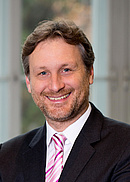
ao.Univ.Prof. Dr. Rainer Leitgeb
Medizinische Universität Wien
Duration
01.01.2015 - 31.12.2021
Commercial Partner
Carl Zeiss Meditec AG , Carl Zeiss Meditec Inc. , Exalos AGInterview